Four Reasons Our Garlic Tastes Great
1) Nutrient rich soil
2) Extensive taste testing of different garlic varieties
3) Hand grown and sustainable
4) Weather extremes boost garlic flavor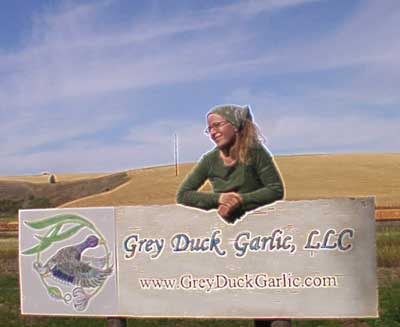
Picture: Patty leans on the Grey Duck Garlic sign after garlic harvest.
1) Our organic hardneck garlic is grown in Palouse loess; some of the best soil in the world. Great soil equals great tasting garlic.
The Palouse region of Washington is known for its rolling hills and deep rich topsoil known as Palouse loess. Palouse loess is soil blown off departing glaciers during the last ice age. This extremely fertile topsoil soil is highly desirable and is over 12 foot deep in our organic garlic field. Its beauty and fertility has caused more than one case of ‘soil lust’ among visiting out of town gardeners. We have to shake down visitors to check for unauthorized soil in pockets.
Picture: Phillips garlic bulbs with yellow fall leaves.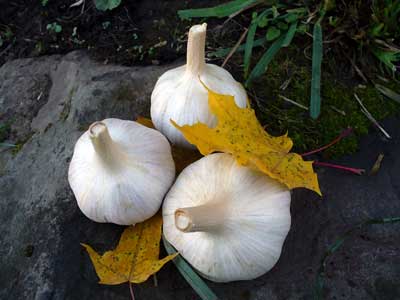
Local soil celebrities may include the Palouse earthworm. This rare earthworm has only been observed several times in this region and prefers undisturbed native soil. Jane had an unconfirmed Palouse earthworm sighting outside her back door two winters ago, but did not collect a specimen for positive identification. She did cover the large wiggler up with a board to prevent her free range hens from taking a nibble. The last two years we have had several more sighting of possible Palouse earthworms.
2) Taste is Essential. If we don’t think the garlic taste is outstanding we don’t grow that variety.
Every garlic variety we grow has been taste tasted in numerous dishes. If we don’t love the taste, we don’t grow it, and we don't sell it to you. Our goal is to develop a portfolio of different garlic flavors to compliment the gourmet cook's palate. So far over half the garlic varieties we have tested have failed our rigorous taste testing. Others have failed the growing test!
3) We hand plant, weed, harvest, and cure every garlic bulb.
Handling garlic by hand prevents bruises and discolorations that can shorten shelf life. 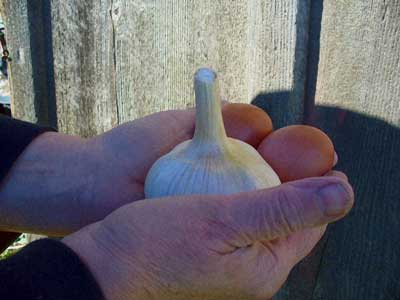
Picture: Our garlic is handled like a delicate egg to avoid bruising and bad spots. Edna cradles two eggs and a German Red garlic bulb.
Our all organic natural growing methods result in in a healthy sustainable crop of garlic. Grey Duck Garlic appreciates our crop, cares for our land, and encourages our garlic plants to grow.
4) Our garlic is grown under harsh weather conditions which help it develop deep flavors.
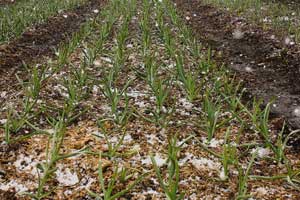 We don't coddle our garlic. Our garlic is grown in dryland conditions with no irrigation. Our weather is inconsistent. Our garlic combats spring flooding, snow in May (picture), frosts for fourth of July, and hail the size of large marbles in June. During the winter, temperatures can zoom from below freezing to a balmy 70 °F. Harsh weather stimulates the production of beneficial phytochemicals in the garlic which helps ensure survival and great taste (think of the difference in taste between heirlooms tomatoes from Grandma’s garden and supermarket tomatoes).
 Why We Are Certified Organic